
This article originally appeared on The Trek, which you can read here.
Everyone’s heard the horror stories: people skipping off into the wilderness only to limp back to civilization with blistered feet, lost toenails, or even stress fractures. We are only as strong as our foundation — and for hikers, that foundation is our feet. Finding the right pair of shoes can make or break a trip. With so many choices and features, it can be hard to know what you truly need — and what you’re willing to compromise on.
In recent years, many thru-hikers have gravitated toward zero-drop footwear. Altra gained traction in this space over a decade ago with the introduction of the Lone Peak, and the brand has continued to lead the zero-drop market with innovative updates across its lineup.
Among Altra’s most popular models is the Olympus, which saw the release of its sixth iteration in 2024. But instead of launching an Olympus 7 in 2025, Altra took a different route and gave us a completely reimagined version: the Altra Olympus 275.
What’s in a Name?
To distinguish this model from the standard Olympus, Altra named it the “275” — a nod to the brand’s humble beginnings. Back in the early days, Altra’s founders used a toaster oven set to 275°F to heat-mold their first zero-drop prototypes. The brand has obviously come a long way since then — today, Altra is one of the most popular footwear choices on America’s long trails.

Altra Olympus 275 At a Glance
- MSRP: $185
- Weight: 9.6 oz (women’s) | 11.9 oz (men’s)
- Cushioning: High
- Heel-to-Toe Drop: 0mm
- Stack Height: 33mm
Circumstances of Review
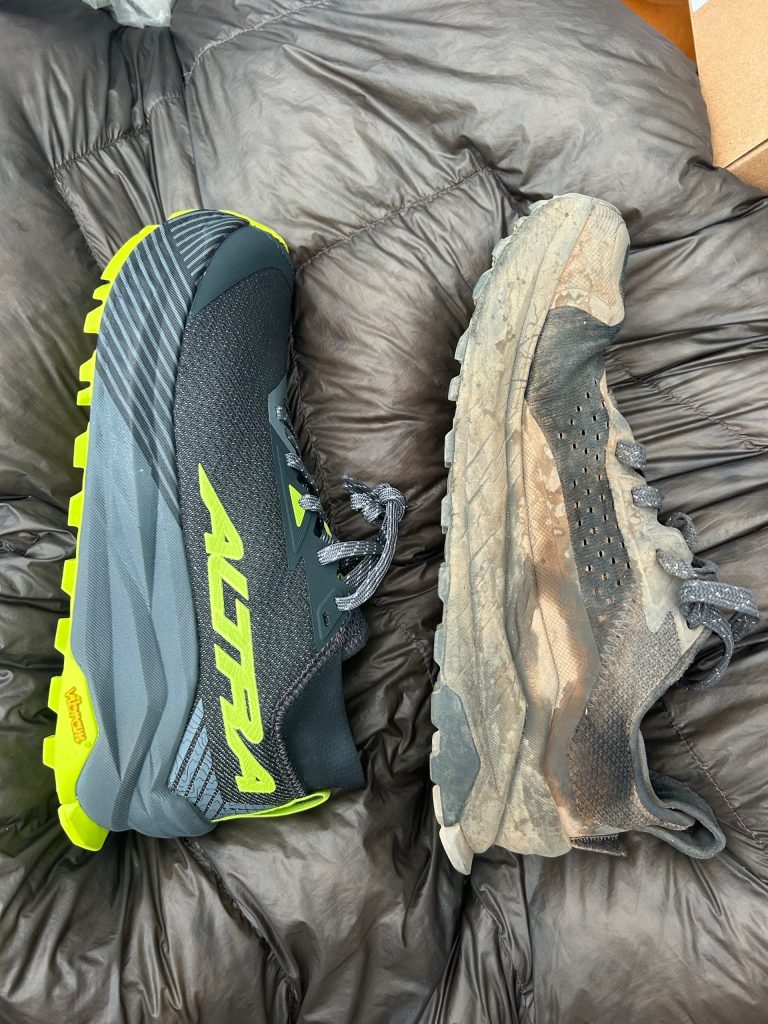
I put the Olympus 275s through the wringer during the final leg of my 2025 Pacific Crest Trail thru-hike. I wore them through the entire state of Washington, from Cascade Locks to the Canadian border — over 500 miles. After that, I added another 100 miles in Great Smoky Mountains National Park. By the time of this review, my Olympus 275s had over 600 miles on them.
I’ve worn Altras exclusively since my first thru-hike in 2021. I started with the Olympus on the Appalachian Trail and have worn the 4, 5, and 6 models — as well as the Lone Peak 4, 5, and 9. While I like the Lone Peaks, I prefer the added cushioning of the Olympus line. On the PCT, I went through five different pairs: two pairs of the Olympus 5, two of the Olympus 6, and one pair of the Olympus 275.
Read Next: Altra Lone Peak 9 Review
Intended Use
Altra’s Olympus line is built for trails. They’re technically trail runners — essentially rugged tennis shoes durable enough to handle the backcountry. Thanks to their high level of cushioning, they’re ideal for long hikes and ultra-distance runs.
Altra markets them as best for “technical trail running” and “all-day trail running,” which makes them equally suited to thru-hiking, where you’re on your feet all day navigating challenging terrain.
Why Altra?
Altra is best known for two core features: a wide toe box and zero drop.
Their signature FootShape design allows your toes to splay naturally, unlike traditional shoes that taper to a point. This enhances balance, stability, and comfort over long distances. Altra offers three foot shape options: Original, Standard, and Slim. The Olympus 275 uses the Original FootShape, meaning it has the roomiest toe box and a broader midfoot fit.
Second is the zero-drop design. Most shoes have a heel-to-toe drop of around 5mm, meaning your heel sits slightly higher than your toes. Altra pioneered the zero-drop movement, where the heel and forefoot sit level. This encourages a more natural stride.
All of Altra’s trail runners — including the Lone Peak, Timp, and Olympus — are zero-drop. In 2024, Altra released its first non-zero-drop trail runner, the Experience Wild, which had a 4mm drop. That model was updated in 2025 with the Experience Wild 2.

Altra Olympus 275 Features
Upper
The Olympus 275 is Altra’s first trail shoe to feature a MATRYX upper — a one-piece woven fabric made from individually coated polyamide and Kevlar yarns. It’s lightweight, breathable, abrasion-resistant, and supportive. For reference: Kevlar yarns are used in Ursacks to keep bears out of food bags — so yes, it’s tough.
Other major brands like Hoka, Merrell, and Salomon have also begun using MATRYX in their trail shoes.
Midsole
The shoe uses compression-molded EVA foam, delivering substantial but lightweight cushioning. Altra categorizes its cushioning into four levels: Low, Moderate, High, and Max. The Olympus 275 lands in the “High” category.
Outsole
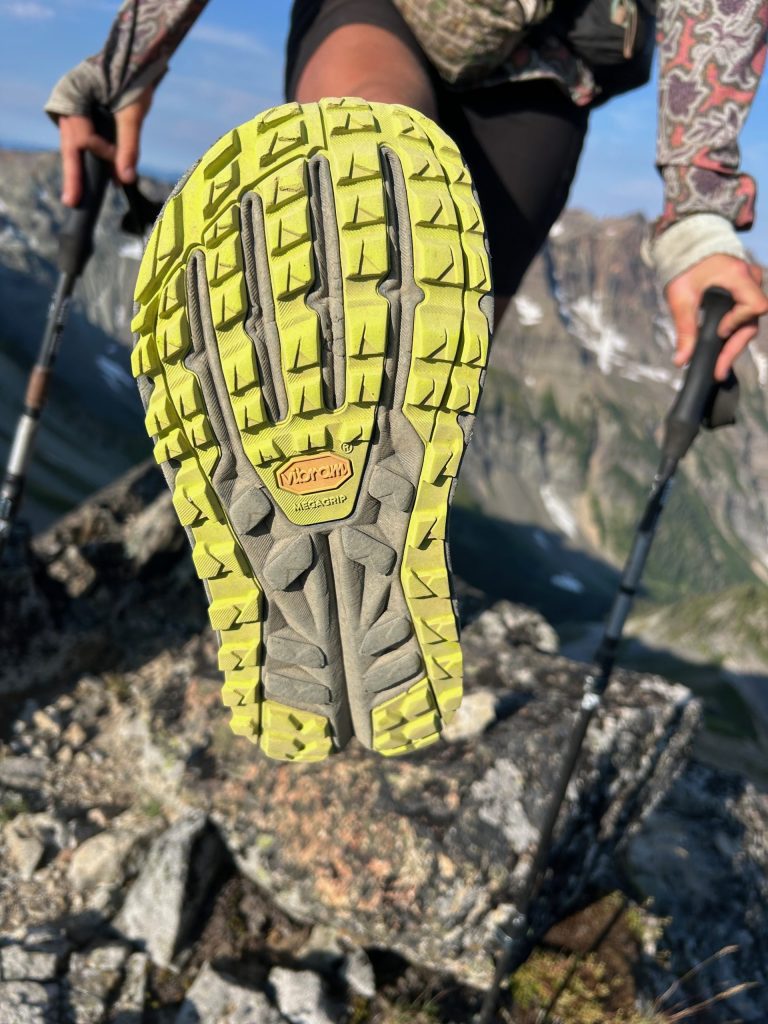
Altra continues its partnership with Vibram, using the Megagrip outsole — a sticky rubber compound designed for excellent traction on both wet and dry surfaces.
Built-In Scree Sleeve
New to the Olympus 275 is a scree sleeve — a soft, flexible fabric that extends up from the shoe collar and hugs your ankle. It keeps debris like rocks and twigs out of your shoes, reducing the need for gaiters. While many Altra models feature the GaiterTrap, the 275 omits it, opting for this built-in debris barrier instead.
Olympus 6 vs. Olympus 275: What’s Changed?
While the Olympus 275 belongs to the same family, it introduces significant updates — along with a $10 price increase.
Upper Material: The most obvious difference is the MATRYX upper on the 275, which replaces the “engineered mesh” found on the Olympus 6. In my experience, the engineered mesh was less durable and more prone to blowouts.
Cushion Rating: Altra lists the Olympus 6 as having Max cushion and the 275 as High, but I personally didn’t notice a difference between the two on trail. Both felt equally supportive for 30+ mile days.
Heel Padding: The 275 ditches the over-padded “Achilles pillow” from the Olympus 6 — a feature that gave me (and many others) brutal heel blisters. I was thrilled to see this removed.
Laces: The 275 comes with longer laces, addressing another common complaint with the 6. With the older model, the laces were too short for a secure double knot — problem solved here.
Olympus 275 Pros
Durable Upper
I was impressed by how well the MATRYX upper held up. On every other pair of Olympus shoes I’ve worn, the stitching near the sides gave out around 400–500 miles. With the 275s, I expected the lightweight material to fail — but it didn’t. Though the fabric showed visible strain where my foot bends, I never got a rip or blowout, even after 600+ miles.
Cloud-Like Cushioning
I loved the EVA foam in these shoes. While some prefer minimal cushioning for a more grounded feel, I appreciated the soft, supportive ride. The high cushion helped me push big miles each day, even as my feet grew tired.
Excellent Traction
Thanks to the Vibram Megagrip outsole, I felt confident scrambling over scree, slick rocks, and muddy switchbacks throughout Washington. The outsole remained grippy and reliable even after hundreds of miles.
No More Leaf Litter
The scree shield worked surprisingly well. I’ve always worn gaiters, but debris still managed to sneak in. With the 275, I rarely had to stop to shake out rocks or twigs. Note: A friend with skinnier ankles said the sleeve didn’t seal well for him — maybe I just have fat ankles. Either way, it worked great for me.
Olympus 275 Cons
Bulky Feel
Like other Olympus models, the 275s can feel a bit like clown shoes — especially if you wear a larger size. The wide toe box and high stack height make for a bulky silhouette. Not ideal if you’re looking for something sleek or trying to move quickly down the trail.
No More GaiterTrap
The built-in scree sleeve replaces the GaiterTrap, meaning there’s no easy way to attach gaiters. Some brands sell gaiters with adhesive Velcro you can DIY onto the heel, but I miss the convenience of Altra’s original gaiter system.
Limited Colors
Currently, the Olympus 275 only comes in two colors: black with either red or green accents. Compared to the 13+ options available for the Olympus 6, this is a bit of a letdown. Hopefully more color ways will be available in upcoming models.
Not Ideal for Four-Season Hiking
The Olympus 275 performs well in three seasons but isn’t the best choice for winter conditions. If you anticipate cold, wet weather, you’ll likely want to consider a waterproof trail runner or even a lightweight hiking boot. At the time of this review, the Olympus 275 is only available in a non-waterproof version.
For those seeking winter-ready footwear, the Olympus 6 GTX is available in both low and mid versions, featuring leather and GORE-TEX uppers for improved protection in snow and rain.

Final Thoughts
The Olympus 275 has become my new favorite hiking shoe. While I’ll admit I’m already an Altra fan, I genuinely believe this model is a step above the standard Olympus 6.
For just $10 more, you get a more durable upper, thoughtful design improvements, and the same comfort and performance Altra is known for. I got more mileage out of this pair than any previous Olympus, and I found them more cushioned and supportive than the lower-profile Lone Peaks.
If you’re looking for a zero-drop shoe with high cushioning, excellent durability, and all-day comfort, the Olympus 275 is a fantastic choice for thru-hiking, trail running, or long-distance backpacking.
Comparable Shoes
- MSRP: $150
- Weight: 8.6 oz women’s
- Cushioning: Medium
- Heel-Toe Drop: 0mm
- Stack Height: 28mm
- MSRP: $155
- Weight: 8.2 oz women’s
- Cushioning: Balanced
- Heel-Toe Drop: 5mm
- Stack Height: 33mm
- MSRP: $150
- Weight: 9.8 oz women’s
- Cushioning: Balanced
- Heel-Toe Drop: 6mm
- Stack Height: 32mm
- MSRP: $180
- Weight: 9 oz women’s
- Cushioning: Balanced
- Heel-Toe Drop: 4mm
- Stack Height: 32mm
The Altra Olympus 275 was donated for the purpose of review.
 Magic in the Mountains

Leave a comment